
Coral Reefs and Climate Change: An Explainer for UK Students
Coral Reefs and Climate Change: An Explainer for UK Students
Coral reefs are built by animals smaller than a grain of rice. Each polyp is a distant relative of the jellyfish: it settles on rock, secretes a limestone cup and stays put for life. Inside its tissue live microscopic algae that photosynthesise and hand most of the resulting energy back to their host. Break that partnership and a reef can turn white within weeks. That is why greenhouse gases matter so much here. Warming and acidification attack a relationship that took centuries to build, and they do it faster than corals can adapt.
That short paragraph contains most of the science in miniature. The rest of this explainer unpacks it: what a reef actually is, why it matters to people who may never see one, how heat and chemistry do their damage, and what is being done about it.
What a reef actually is
A coral reef is not a rock, a plant or a single animal. It is a structure built by colonies of tiny animals called polyps, each of which sits inside a cup of calcium carbonate — limestone — that it secretes itself. A polyp is often only a few millimetres across, but colonies fuse and grow over decades and centuries. The living layer on top is little more than a thin skin; beneath it sit metres of dead skeleton, the accumulated architecture of countless generations.
The Great Barrier Reef is roughly 2,300 kilometres long and can be seen from space, yet almost all of the living animal tissue is in the top few centimetres. Reefs cover less than one per cent of the ocean floor, but they support around a quarter of all known marine species. Think of them as the ocean's equivalent of a rainforest: not the largest habitat, but one of the most crowded and productive.
The partnership that keeps a reef alive
Inside the tissue of each polyp live microscopic algae called zooxanthellae. The arrangement is a trade. The algae get shelter and the raw materials for photosynthesis; in return they hand over up to 90 per cent of the sugar they make. That energy is what lets corals build limestone fast enough to outpace the waves that would otherwise grind a reef down.
The algae also give corals their colour. Brown, green and gold tones come from the pigments inside them — the coral skeleton underneath is white. This detail matters, because it explains what bleaching really is.
Bleaching, step by step
- Water temperatures rise a degree or two above the usual summer maximum.
- The algae become stressed and start producing damaging molecules instead of useful ones.
- The coral expels them, and the white skeleton shows through the now-transparent tissue.
- The coral is not dead — yet. It is starving. If the water cools within a few weeks, the algae may return and the colony can recover.
- If the heat persists, the coral dies, and the limestone framework begins to erode.
A useful analogy is a house that has lost its power supply. The building still stands, but nothing inside it works. Repeated bleaching events are like repeated power cuts: the first one is survivable, the fifth one usually is not.
How climate change attacks a reef
1. Warming
Greenhouse gases trap heat, and around 90 per cent of that extra heat has gone into the ocean. Marine heatwaves that were once rare now recur often enough that some reefs have no time to recover between them. The Intergovernmental Panel on Climate Change estimates that at 1.5°C of warming, 70 to 90 per cent of tropical reefs would decline; at 2°C, the figure rises above 99 per cent. The 2024 global bleaching event was the fourth ever recorded and the most widespread on record.
2. Ocean acidification
This is the quieter problem. When carbon dioxide dissolves in seawater it forms carbonic acid, lowering the pH. Ocean surface pH has fallen from about 8.2 to 8.1 since the industrial revolution — a small number on paper, but roughly a 30 per cent increase in the concentration of hydrogen ions. That shift makes it chemically harder for corals to pull carbonate out of the water to build their skeletons, and easier for those skeletons to dissolve. A reef still being built is a reef being quietly sanded down from the inside.
3. Storm damage, disease and rising seas
Warmer water fuels stronger tropical cyclones, which can shatter reef structures in a single afternoon. Warmer water also encourages coral diseases. Sea level rise means corals must grow upwards simply to stay in the sunlight they need. None of these stresses acts alone; they stack on top of one another.
A reef can survive a bad year. What it cannot survive is a bad decade — and climate change has turned one bad year into the next.
Why this matters in the UK
Coral reefs are not only a tropical postcard. They matter to Britain in several concrete ways.
- UK Overseas Territories hold significant coral reefs, including those around the Cayman Islands, the Turks and Caicos Islands, the British Virgin Islands, Anguilla and Bermuda. The Chagos Archipelago in the Indian Ocean contains some of the least damaged reefs on Earth.
- Cold-water corals grow in UK waters, notably Lophelia pertusa reefs off western Scotland and around the Darwin Mounds, which are protected as marine conservation zones. Cold water absorbs carbon dioxide more readily, so these reefs may be among the first to feel acidification.
- Coastal protection. Reefs absorb wave energy and reduce flooding. Lose them and the cost of sea defences rises for coastal communities.
- Economy and science. Reef tourism, fisheries and reef-derived medicines — compounds from corals are used in treatments for cancer and pain — are global industries. UK students increasingly study and work in them.
What is being done — and what actually works
Conservation falls into two broad camps, and it is worth being honest about their limits.
Local measures include no-take marine protected areas, controls on pollution and dredging, bans on destructive fishing, and restoring mangroves and seagrass beds that shelter young reef fish. These work, but only where reefs are not simultaneously being cooked.
Restoration includes coral gardening, where fragments are grown on frames and replanted, and selective breeding of heat-tolerant colonies. These techniques are impressive, but they operate at the scale of hectares while reefs are lost at the scale of nations. As one marine biologist put it, restoration is buying time, not solving the problem.
The blunt conclusion is that reefs ultimately depend on reducing greenhouse gas emissions. Everything else is damage limitation.
What you can do as a student
- Understand the science well enough to explain it accurately — misinformation thrives in the gap between "bleaching" and "dead".
- Reduce your own footprint, and use your voice: emissions policy responds to public pressure.
- Choose sustainable seafood where you can, and be aware that farming and tourism supply chains reach reef regions.
- Join citizen science, such as reef monitoring surveys or marine litter projects.
- Consider studying marine biology, oceanography, environmental law or science communication — the reefs need lawyers and writers as much as they need divers.
Coral reefs are the clearest demonstration of a simple rule: some things cannot be fixed after the fact. A reef can be replanted, protected and studied, but the relationship at its heart — polyp and alga, sunlight and limestone — only works inside a fairly narrow range of temperatures and chemistry. That range is what climate change is moving, and it is why the fight for reefs is, in the end, the same fight as the one over emissions.
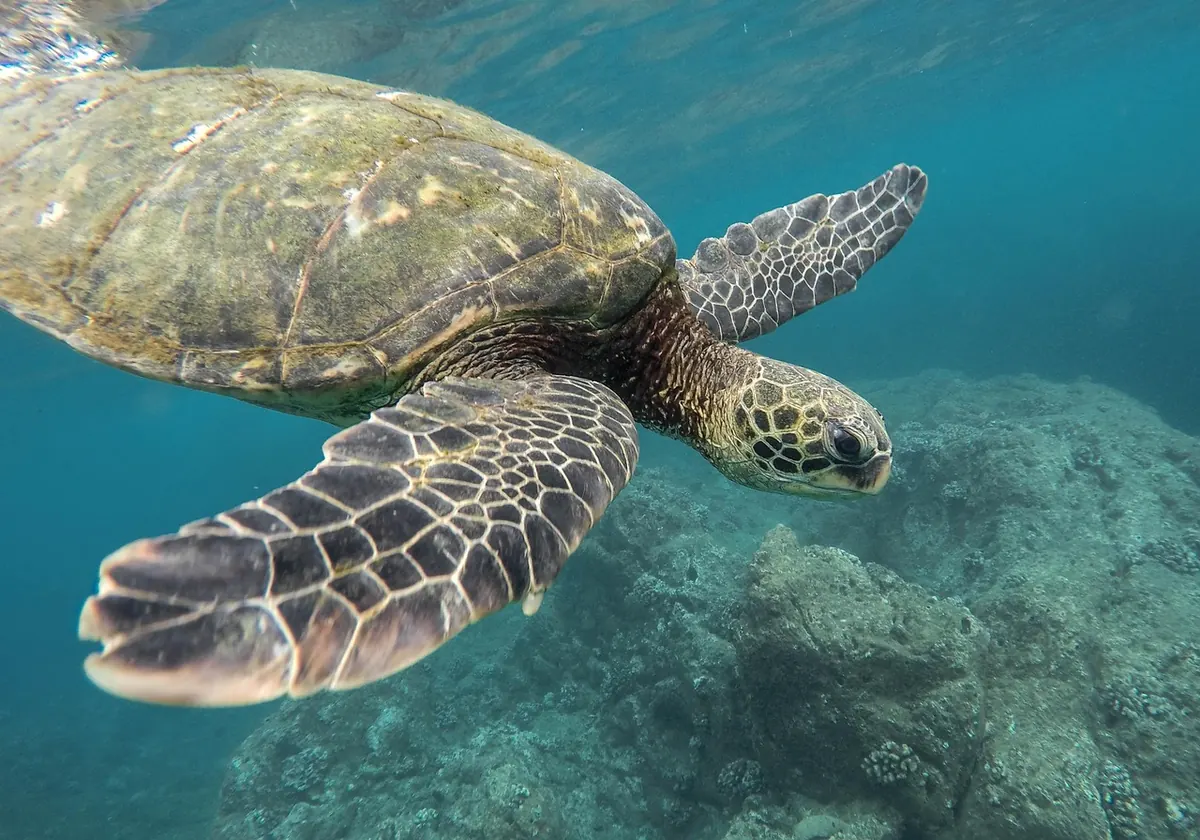
Photo: Pexels / Pixabay