
The Coral Reef Food Web: Who Eats Whom and Why It Matters
A healthy reef looks like chaos: silver schools flicking over the coral, a parrotfish crunching at the rock, something bigger cruising just beyond visibility. Stay with it for ten minutes and a pattern emerges. Almost everything down there is eating, being eaten, or waiting for one of those two things to happen. That tangle of connections — from microscopic algae to reef sharks — is the coral reef food web, and knowing who eats whom explains why a reef can look fine one season and be smothered in seaweed the next.
The Base of the Web: Sunlight, Algae and Plankton
Energy enters a reef from two directions. The first is sunlight, captured by plants and algae: the zooxanthellae living inside coral tissue, the turf algae coating dead coral and rock, larger seaweeds, seagrass on nearby flats, and drifting phytoplankton. The second is the open ocean, which delivers plankton on currents and tides.
Corals sit in the middle of both. Their symbiotic algae supply most of their energy day to day, while their polyps capture plankton at night with extended tentacles. This is why a food web is a better description than a food chain: the same species can be producer, host and predator depending on the hour.
Herbivores: the Reef's Maintenance Crew
Grazers are the quiet architects of a coral reef. Parrotfish and surgeonfish scrape algae from rock and coral, opening bare space where new coral larvae can settle. Sea urchins graze at night, chitons and limpets work the crevices, and green turtles crop seagrass, keeping it from shading out other life. Parrotfish do something else valuable too — as they bite into reef framework they produce the white sand that ends up on beaches.
This is the group most sensitive to overfishing, because grazers are often easy to catch and are eaten across much of the tropics. When they disappear, algae gains the upper hand. A useful example is the Caribbean, where long-spined sea urchins — efficient grazers — were largely lost to disease in the 1980s. On many reefs, algae took over and has stayed dominant ever since.
Plankton Feeders: Corals, Small Fish and Mantas
Plankton is the reef's daily delivery service. At dusk, coral polyps open and feed on passing zooplankton. Feather stars unfurl, Christmas tree worms retract and re-extend their crowns, and sponges pump seawater through their bodies, filtering out bacteria and fine particles. In the water column, anthias and fusiliers hover in the current, picking off plankton one item at a time.
The same resource supports giants. Manta rays cruise through plankton-rich water with mouths open; whale sharks do something similar on a larger scale. Reefs and open ocean are not separate systems. Currents, upwelling and season all change what arrives, and species time their feeding to suit.
Predators, Scavengers and the Clean-Up Crew
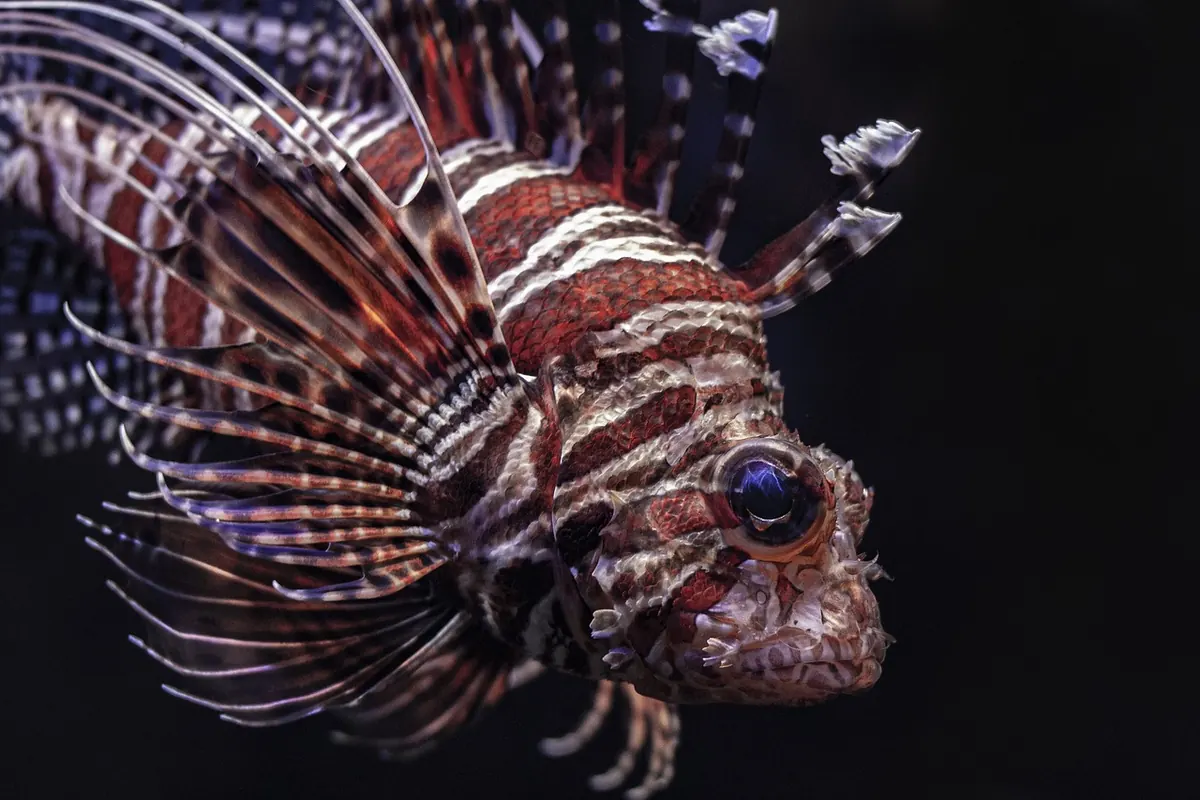
Above the grazers sit the fish that eat them. Groupers, snappers, jacks and moray eels hunt among the coral; lionfish, now widespread in the Atlantic and Caribbean, ambush small fish and have few natural predators there. At the top are the reef sharks — blacktips and whitetips, grey reef sharks in the Indo-Pacific — along with barracuda and large trevally.
Predators matter less through the sheer number of fish they remove than through the behaviour they shape. Fear keeps grazers moving, spreading their feeding across the reef instead of stripping one patch bare.
Not everything is about killing. Cleaner wrasses and cleaner shrimps set up stations where larger fish queue to have parasites removed — a straightforward trade of food for health. Below all of this, sea cucumbers, brittle stars and hermit crabs process dead tissue and waste, and bacteria break down what is left, returning nutrients to the system.
What Happens When Key Species Decline
Algal phase shifts
Remove enough grazers and the reef flips from coral-dominated to algae-dominated. That shift is hard to reverse: algae traps sediment, releases chemicals that stress coral recruits, and gives juvenile corals nowhere to settle. The structure stays for a while, which is why reefs can look impressive above the waterline while quietly falling apart.
Cascading effects
Changes at the top rarely stay there. Heavy fishing of predators can shift the smaller fish community, and with it the grazing that keeps coral clean — though the effects vary from reef to reef and are often indirect rather than predictable. Meanwhile, nutrient runoff from land, sewage and agricultural fertiliser feeds algae directly, adding pressure that grazers have to work against.
Recovery is possible
Reefs do bounce back when the key players are still around. Protecting herbivores, restoring urchin populations where conditions allow, improving water quality and replanting coral can move a reef in the right direction. The work is slow and local, which is why it happens place by place rather than all at once.
How to Read a Food Web on Your Next Dive
You do not need a lab coat to watch these relationships in action. Pick one coral head and stay put.
- Note how much of the surface is coral and how much is algae or turf.
- Count the grazers: parrotfish, surgeonfish, urchins, turtle tracks in the sand.
- Look for cleaning stations — small wrasses dancing above a coral outcrop while a grouper hovers, oddly still.
- Check the sand for sea cucumbers and the rubble for brittle stars.
- Return at dusk and watch the same spot change shift, as planktivores and nocturnal hunters take over.
- Log what you saw. Survey apps and local reef groups rely on divers and snorkellers to build up long-term records.
One visit tells you very little. The same patch, checked across months, tells you a great deal.
What You Can Do
Support marine protected areas and no-take zones, and say so publicly — protection means most when people ask for it. Choose seafood with care, particularly in places where parrotfish, groupers and other reef species are caught; asking where a fish came from is a fair question in any restaurant. Reduce what washes off your garden and driveway, because fertiliser and soil end up on the reef as surely as they leave your street.
On the water, keep your hands and fins off the coral, skip feeding fish, and choose a mineral-based sunscreen or a rash vest — the less that rinses off in the shallows, the better. If you have a skin condition that needs proper sun protection, speak to a pharmacist or dermatologist for advice that suits you.
None of this needs to be dramatic. Keeping the grazing fish, the plankton feeders and the predators in place is what keeps a reef a reef.
Photo: usefoto / Pixabay